As land acknowledgements grow in popularity, Indigenous people have mixed feelings
As land acknowledgements grow in popularity, Indigenous people have mixed feelings
By Namu Sampath | nsampath@repub.comGreta Jochem | gjochem@repub.com
Published: Oct. 11, 2026, 5:45 a.m.
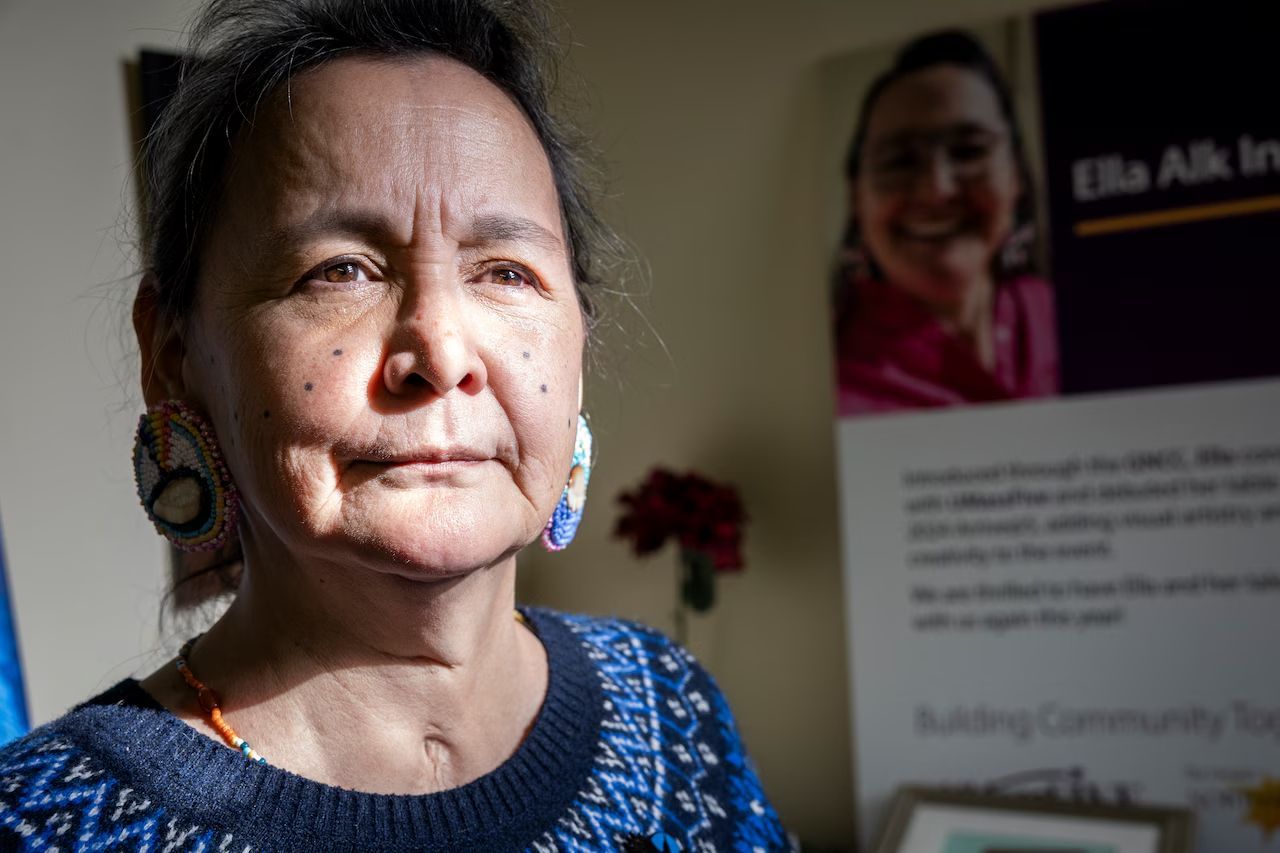
Ella Nathanael Alkiewicz stands in her studio in Northampton on Oct. 6, 2026. (Douglas Hook / The Republican)Douglas Hook
Over the last few years, requests for help writing a land acknowledgement have flooded in to the Hassanamisco Nipmuc Band, said its sonksq, or female leader, Cheryll Toney Holley.
Land acknowledgements are formal statements before an event or posted on an organization’s website that acknowledges the Indigenous groups whose homelands the group now occupies.
Organizations that Toney Holley had never heard of contacted her about acknowledgements. “Everybody wanted one,” she said. “I think in the beginning, we were sort of confused,” she said. “Why are people doing this?”
The Hassanamisco Nipmuc Band made a rule. “If we don’t have a relationship with you then we won’t help you write it,” Toney Holley said. “A land acknowledgement without an ongoing relationship with the people whose land is being acknowledged is just an empty gesture.”
In recent years, land acknowledgements have become increasingly common at college and cultural events and they can be found on organizations’ websites. As they’ve become more prevalent, there’s also been some criticism.
Indigenous people in the region who spoke with The Republican held a range of views on the acknowledgements. Many thought that while they offered some value in educating people, they could also be performative. One point they all emphasized: Taking action is much more important than reading an acknowledgement.
“Returning land is a great thing,” Toney Holley said, giving an example of W.D. Cowls, a massive private landowner in the state, returning 500 acres of land in Sunderland to the Hassanamisco Nipmuc Band.
When paired with action, acknowledgements can be powerful, said Heather Bruegl, a member of the University of Massachusetts Amherst Native Advisory Council, a citizen of the Oneida Nation of Wisconsin and a descendant of the Stockbridge-Munsee Community.
“I think where land acknowledgments miss the mark sometimes is they can come off as performative or just checking words and checking off a box,” Bruegl said.
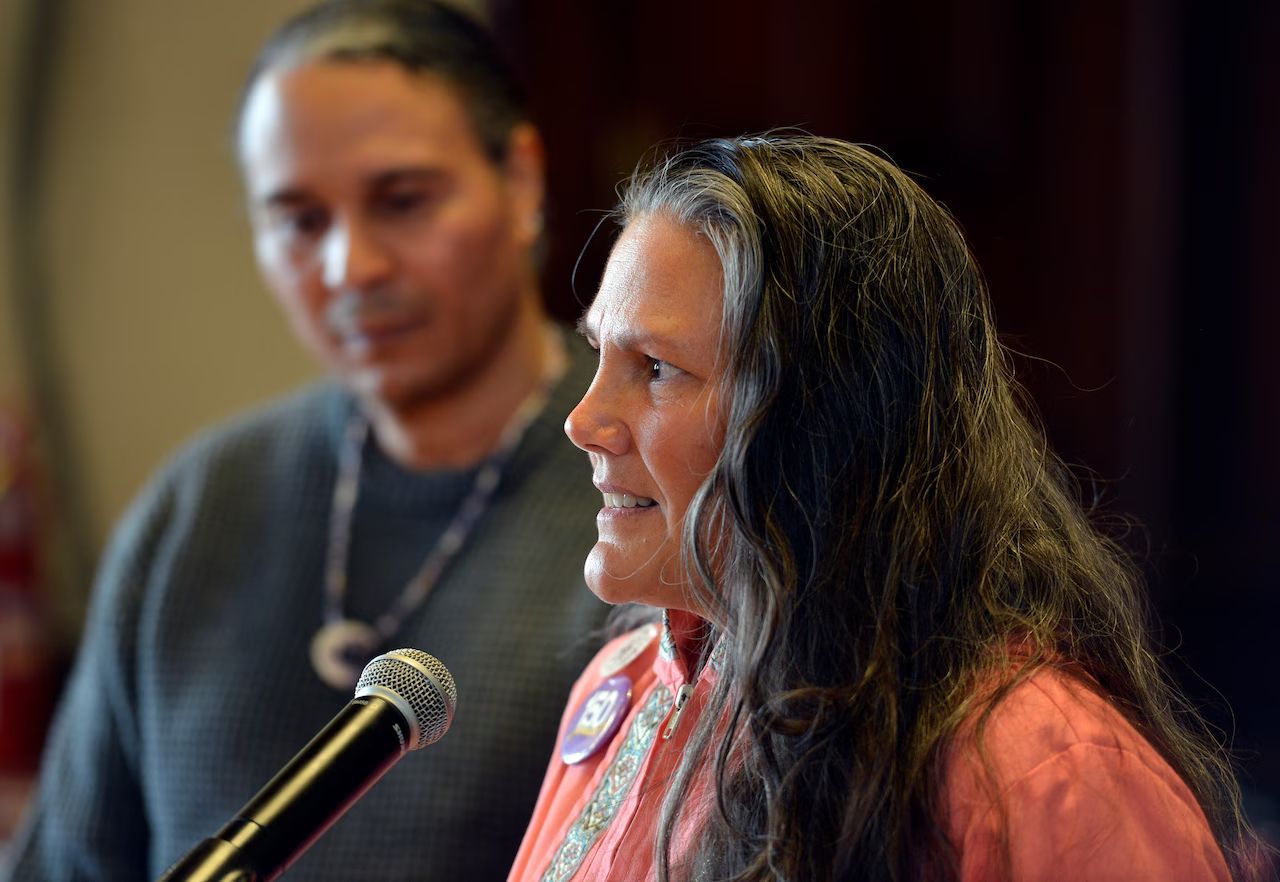
Rhonda Anderson, Western Massachusetts Commissioner on Indian Affairs, speaks during a 2023 ceremony to dedicate Holyoke City Hall, a formality that has taken 150 years to do. In background is Larry Spotted Crow Mann. (The Republican / file photo)
Rhonda Anderson, the Western Massachusetts Commissioner on Indian Affairs, said acknowledgements should use words, like colonization and forced displacement, that reflect their historic and contemporary realities. Anderson is Iñupiaq-Athabaskan, two tribes from Alaska.
JC “Indio” Ortega, an Agawam author and member of the Connecticut Valley Intertribal Council, agrees. “We’re still here after 400 years of forced assimilation, genocide and colonization,” he said. “The real warts of our history should come out. It’s a catharsis. Let’s get into the nitty gritty.”
As a writer, poet and artist, Northampton artist Ella Nathanael Alkiewicz is regularly invited to teach at universities and present to other organizations. She welcomes the acknowledgement at those events.
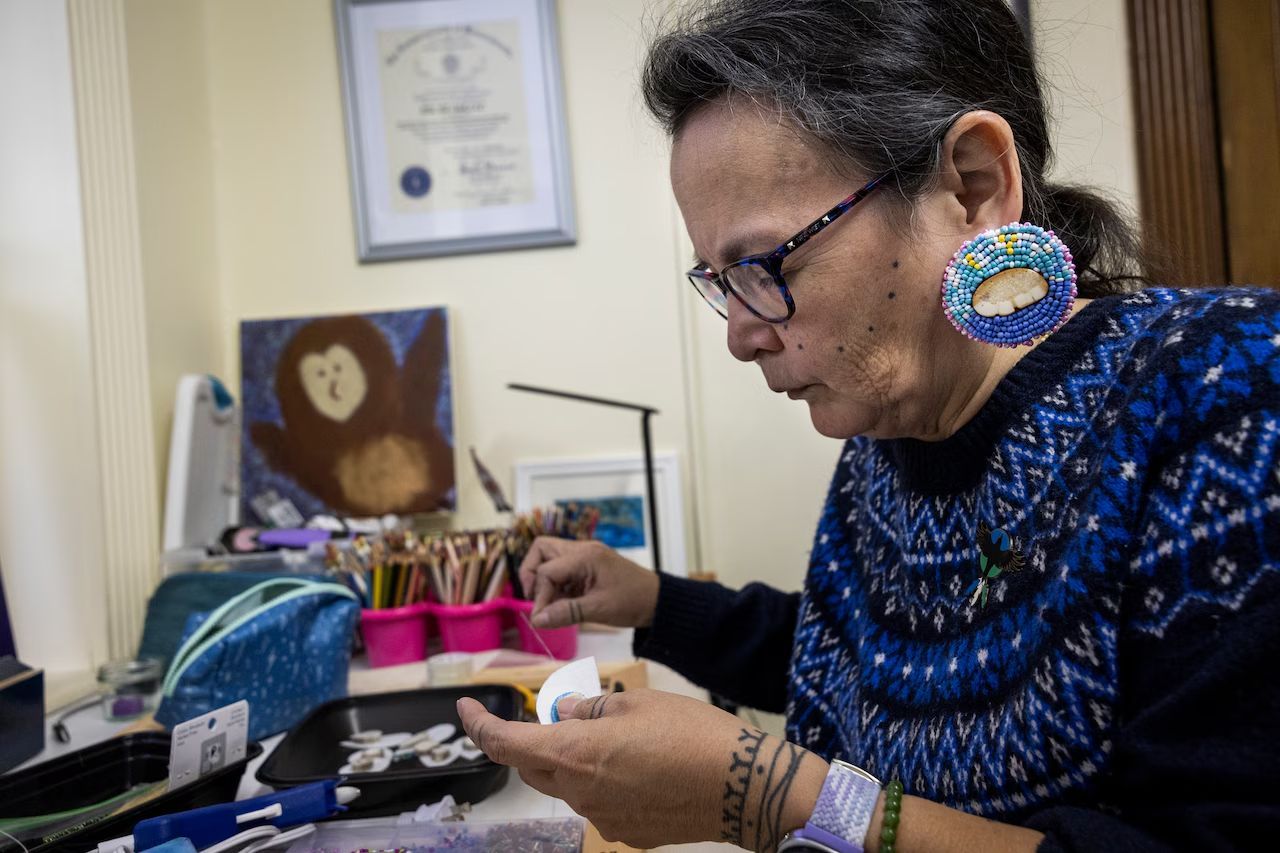
Ella Nathanael Alkiewicz works on traditional Inuit jewelry in her Northampton studio. (Douglas Hook / The Republican)Douglas Hook
Alkiewicz is a beneficiary of the Nunatsiavut Government, a self-governing Inuit region of Labrador, Canada, and a dual Canadian and American citizen. “North America is all native land and people forget,” she said.
She sees the practice of acknowledgements as a useful tool. “I think land acknowledgments are a beginning, not the end all, be all,” she said.
That’s reflected in one she helped write for the Northampton Center for the Arts. That statement says: “Meaningful acknowledgment must be accompanied by monetary support and tangible action as part of a larger process of repair.” The group encourages people to donate to Indigenous organizations and details how it is working with the Ohketeau Cultural Center, a Native-led group.
Meaningful land acknowledgments are about reciprocity, said Andre Strongbearheart Gaines Jr., who is Nipmuc and founder of No Loose Braids, a Native nonprofit, in a back room of an Ashfield hay barn he is converting to a community gathering place.
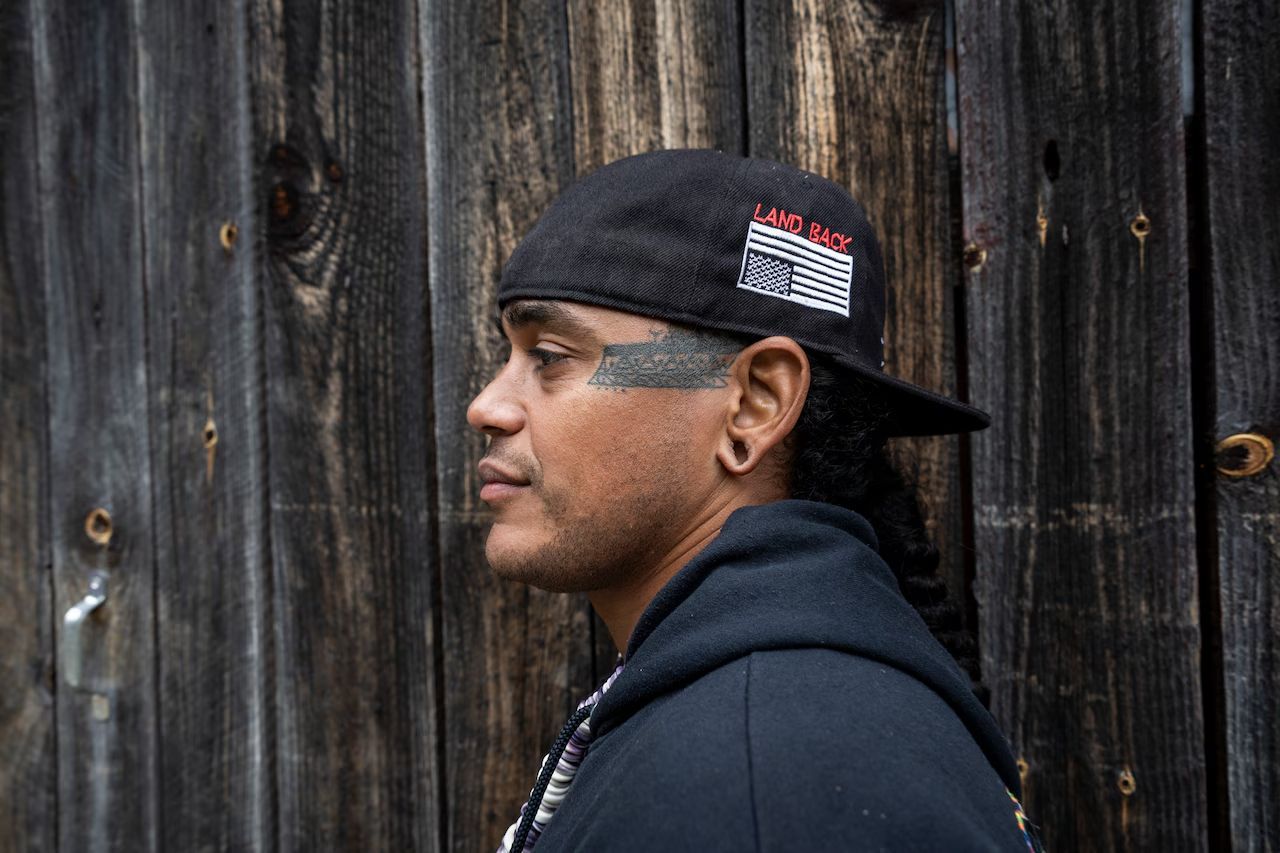
Andre Strongbearheart Gaines Jr., who is Nipmuc and founder of a Native nonprofit, has traditional tattoos behind his eyes and stands next to the community center that is still under construction on Monday, Oct. 5, 2026. (Douglas Hook / The Republican) Douglas Hook
He helps preserve, continue and revitalize Eastern Indigenous culture. That’s evidenced by dried tobacco leaves hanging from the barn’s ceiling, several beaver skins on a chair and open quahog clams — dark blue, purple and white shells — that will be beaded into intricate pieces of jewelry.
“The land is no different from us,” said Gaines Jr., who wears his hair in two thick braids and whose skin is decorated with symbolic tattoos. But, he said, organizations must ask themselves, “‘What does it mean to have a land acknowledgment?’” he said.
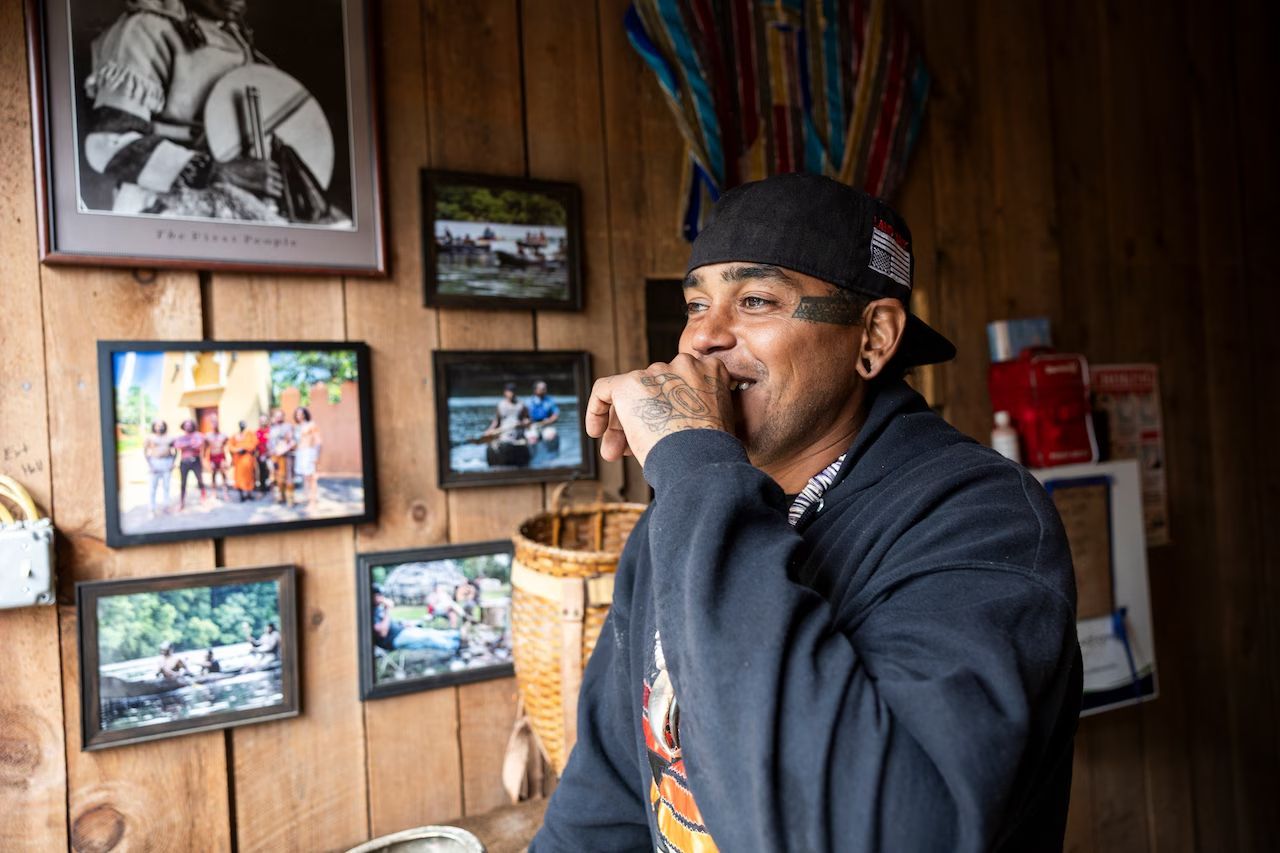
Andre Strongbearheart Gaines Jr., who is Nipmuc and founder of a native nonprofit, jokes with his friends in Ashfield on Monday, Oct. 5, 2026. On the wall behind him are some of the memories of the Nipmuc community. (Douglas Hook / The Republican)Douglas Hook
He also suggested that groups interested in writing a land acknowledgment visit Indigenous people and get to know the culture.
Gaines Jr. said Smith College’s relationship with his tribe has been positive. He’d like to see more organizations reach out to make a long-term connection.
“Our relationship is stronger; it’s intentional,” he said, adding that he’s involved in a land stewardship event held at the college biennially.
Non-Native people should support Indigenous sovereignty, said Laurel Davis-Delano, a sociology professor at Springfield College whose research includes white people’s beliefs and practices and representations that they associate with Native Americans.
Davis-Delano helped write a Springfield-Agawam land acknowledgment for people or organizations doing events in that area to use. At the time, the professor said she felt hopeful that organizations interested in using an acknowledgment would be proactive about supporting Native nations, but it was performative for some groups.
‘Practice what we preach’
Over the course of a year, Bruegl worked on the UMass land acknowledgement as part of the Native Advisory Council. The group consulted with tribes that have roots all over the state.
“To me, land acknowledgments help create visibility,” Bruegl said. “This is a way to acknowledge our existence is still here and we’re still here.”
The statement recognizes the native homelands on which the university sits. It also notes that as a land-grant university, UMass received funding the U.S. government got by selling Native land through the Morrill Act of 1862.
The school runs a variety of programs with Indigenous groups, including architecture students working with the Chaubunagungamaug Band of Nipmuck Indians on designing a cultural center, according to the university. UMass is also home to the Center for Braiding Indigenous Knowledges and Sciences, a project working with 57 Indigenous partners around the world.
At the start of each show at Jacob’s Pillow, a nationally known dance performance center in Becket, the theater plays a recording of its land acknowledgment, said Pamela Tatge, executive and artistic director of the organization.
Adopted in 2019, the statement “amplifies that the land on which we dance is not solely ours, but the ancestral land of the Muh-he-con-ne-ok or Mohican people,” she said.
The organization also maintains an active relationship with the Stockbridge-Munsee Band of Mohican Indians, a federally recognized tribe that was forcibly removed from Western Massachusetts to Wisconsin, and with members of other tribes in Massachusetts.
At Holyoke Community College, Amreen Shaikh, chair of the college’s Acknowledge & Respect Indigenous Residents Committee, worked on its land acknowledgement about two years ago with help from Anderson.
The committee is now planning a variety of related projects, like bringing an Indigenous performer to campus and creating a display in the library of books by Native American writers. It is also highlighting the Indigenous history of the land the college is on, featuring Native American people on campus, and showing the future work the college aims to do.
Shaikh wants to see the college develop stronger relationships with Indigenous groups and start scholarships for Native American students. “It’s very easy for folks in higher ed to get into the words we need to formalize a statement, but the challenging part is making sure we practice what we preach,” she said.
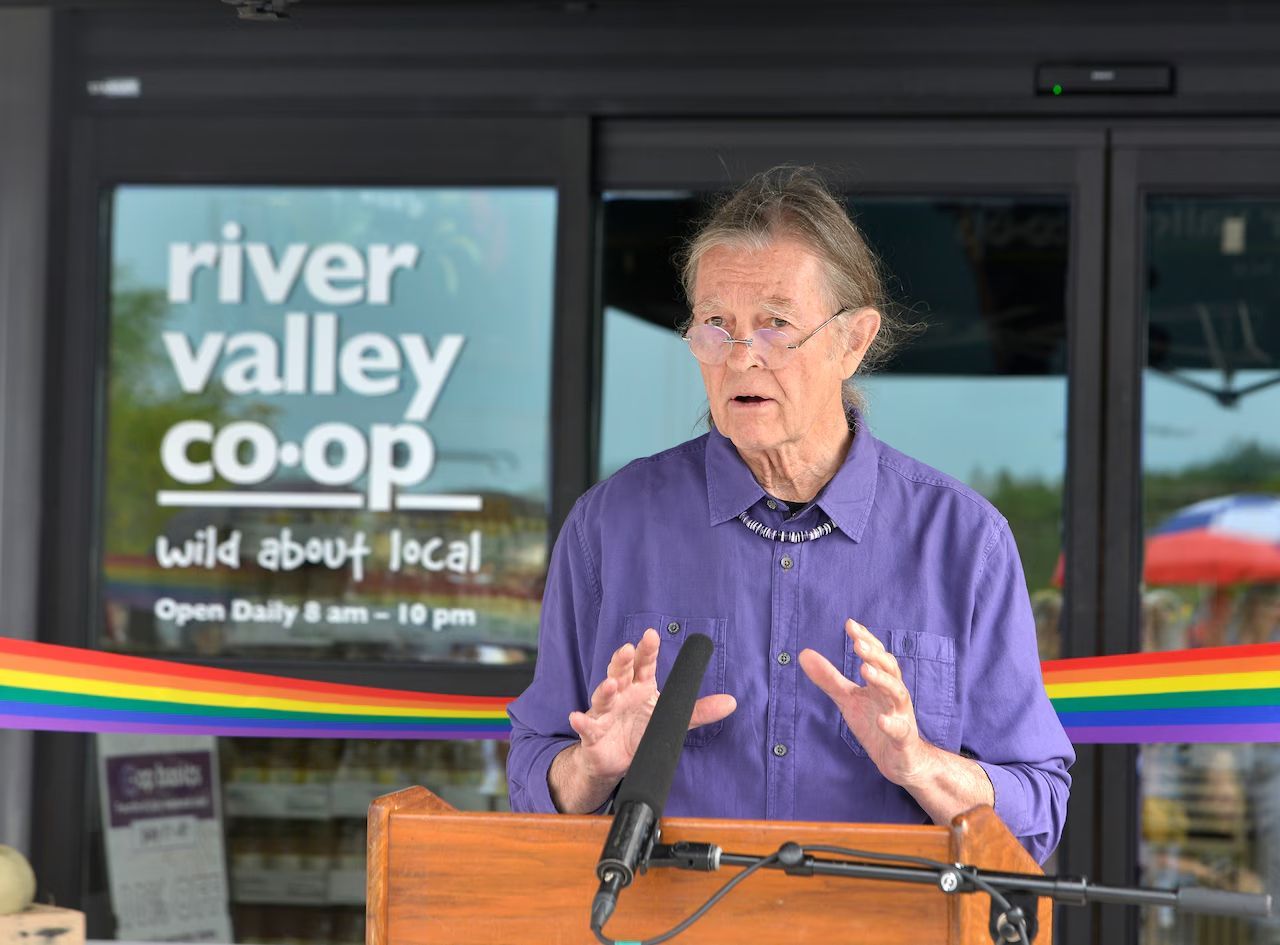
David Brule, chairman of the Nehantic Native Nation, speaks during the opening of the River Valley Co-op in Easthampton in 2021. (The Republican / file photo)
David Brule — president of the Nolumbeka Project, a non-tribal organization that works on promoting and preserving Native American history in New England — offers suggestions for how people can do that.
The work includes supporting renaming Columbus Day to Indigenous Peoples Day, which the state has not done, and advocating to change the state seal, which depicts violence against a Native American.